
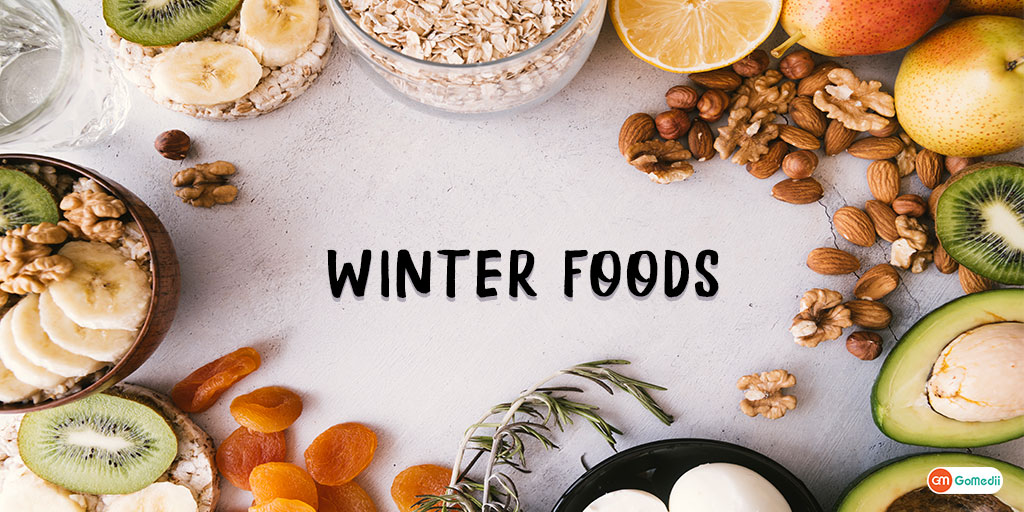
Winter is the season of cozy blankets, misty mornings, and hot beverages. As the temperature drops, our bodies crave warmth and nourishment. The cold weather often makes us sluggish, but with the right foods, we can boost our energy, strengthen immunity, and stay active all season long. Nature provides a rich bounty of seasonal fruits, vegetables, nuts, and grains during winter that not only taste delicious but also keep our bodies healthy and strong.
In this blog, let’s explore the best foods to eat in the winter season for health, their benefits, and simple ways to include them in your daily diet.
Table of Contents
1. Root Vegetables – Nature’s Winter Gift
Root vegetables such as carrots, sweet potatoes, beets, turnips, and radishes are at their peak in winter. These vegetables are rich in beta-carotene, vitamins A and C, potassium, and antioxidants that protect against infections and support skin health.
- Why they’re great: Root vegetables are naturally warming and help improve circulation. They are also high in fiber, keeping your digestive system in good shape.
- How to enjoy: Roast them with herbs, make hearty soups, or add them to stews and curries for a colorful and healthy winter meal.
2. Leafy Greens – Iron and Immunity Boosters
During winter, markets overflow with leafy greens like spinach, mustard greens (sarson), fenugreek (methi), kale, and collard greens. These are rich in iron, calcium, folate, and vitamin K—nutrients that help keep your bones strong and blood healthy.
- Why they’re great: Leafy greens help in detoxifying the body, improving metabolism, and enhancing immunity.
- How to enjoy: Cook saag (traditional Indian green curry), add them to soups, or sauté them with garlic for a simple and nutritious side dish.
3. Citrus Fruits – The Vitamin C Powerhouse
Winter is the perfect time to enjoy oranges, lemons, sweet limes, and grapefruits. These tangy treats are loaded with vitamin C, which helps fight off cold, cough, and flu—common winter ailments.
- Why they’re great: Citrus fruits support collagen production, keeping your skin healthy and glowing even in dry winter air.
- How to enjoy: Have them as snacks, add to salads, or start your day with a glass of fresh citrus juice.
4. Nuts and Seeds – Tiny but Mighty
Nuts like almonds, walnuts, cashews, and pistachios, along with seeds such as flaxseeds, chia, sesame, and sunflower seeds, are superfoods that should be a staple in winter.
- Why they’re great: They are packed with omega-3 fatty acids, protein, fiber, and healthy fats that keep your body warm, improve heart health, and promote glowing skin.
- How to enjoy: Snack on a handful of mixed nuts, sprinkle seeds over salads or smoothies, or add them to your porridge for extra crunch and nutrition.
5. Whole Grains – Sustained Energy Source
Whole grains like oats, millets (ragi, jowar, bajra), and brown rice provide long-lasting energy. They are high in fiber and complex carbohydrates, which release energy slowly and keep you feeling full longer—ideal for cold winter days when our bodies need extra fuel.
- Why they’re great: They stabilize blood sugar levels, aid digestion, and keep the body warm.
- How to enjoy: Have a bowl of oatmeal with honey and nuts for breakfast, or prepare traditional Indian winter dishes like bajra roti or ragi porridge.
6. Spices and Herbs – Natural Heaters
Spices are more than just flavor enhancers—they are natural healers. Turmeric, ginger, black pepper, cinnamon, and clove are some of the best winter spices that keep your body warm and boost immunity.
- Why they’re great:
- Turmeric contains curcumin, which has anti-inflammatory properties.
- Ginger improves digestion and protects against colds.
- Cinnamon regulates blood sugar and adds warmth to meals.
- How to enjoy: Add them to soups, curries, or teas. A cup of turmeric milk or ginger tea can be your perfect winter companion.
7. Ghee – The Golden Elixir
In many traditional diets, especially Indian, ghee (clarified butter) is considered a superfood during winter. It’s rich in healthy fats, vitamin A, and butyric acid, which support digestion and provide instant warmth.
- Why it’s great: Ghee nourishes the skin, strengthens joints, and provides sustained energy.
- How to enjoy: Add a spoonful to your dal, rice, or rotis, or drizzle over cooked vegetables for a richer flavor.
8. Honey – The Natural Sweetener and Immunity Shield
Honey is one of the best natural sweeteners for winter. It contains antioxidants, antibacterial properties, and acts as a natural cough suppressant.
- Why it’s great: It boosts immunity, aids digestion, and provides instant energy without refined sugar.
- How to enjoy: Mix honey in warm water with lemon each morning, drizzle it on pancakes, or add it to your tea instead of sugar. (Avoid heating honey directly as it can lose its nutrients.)
9. Dry Fruits – Instant Energy Boosters
Dry fruits such as dates, figs, apricots, and raisins are excellent sources of iron, potassium, and natural sugars. They are great for combating fatigue and keeping the body warm.
- Why they’re great: They improve hemoglobin levels, aid digestion, and act as a natural snack for quick energy.
- How to enjoy: Add them to your morning cereal, desserts, or just eat them plain as a healthy mid-day snack.
10. Soups and Stews – Comfort in a Bowl
Nothing feels better than a bowl of warm soup on a cold evening. Soups made from seasonal vegetables, legumes, and herbs are both nutritious and comforting.
- Why they’re great: They hydrate the body, are easy to digest, and can be packed with proteins and vitamins.
- How to enjoy: Try combinations like tomato-carrot soup, chicken broth with herbs, or lentil soup with spinach for a wholesome winter meal.
11. Jaggery – The Traditional Sweetener with Health Benefits
Jaggery (gur) is another winter essential in many cultures. Made from sugarcane or palm sap, it’s rich in iron, magnesium, and minerals.
- Why it’s great: It helps cleanse the liver, prevents anemia, and keeps the body warm.
- How to enjoy: Use jaggery instead of sugar in desserts or add a small piece to warm milk after meals to aid digestion.
12. Herbal Teas – Warmth in Every Sip
Instead of regular tea or coffee, switch to herbal teas like chamomile, tulsi, ginger, cinnamon, or green tea during winter.
- Why they’re great: Herbal teas soothe the throat, support digestion, reduce stress, and keep the body warm.
- How to enjoy: Sip a cup after meals or before bed for a cozy, relaxing experience.
13. Seasonal Fruits – Natural Immunity Boosters
Winter brings fruits like apples, guavas, pomegranates, and pears—all rich in vitamins, antioxidants, and fiber.
- Why they’re great: They strengthen the immune system, improve digestion, and keep your skin radiant.
- How to enjoy: Eat them fresh, blend into smoothies, or toss them in a salad for a colorful winter treat.
14. Legumes and Pulses – Protein for Strength
Lentils, chickpeas, kidney beans, and black grams are hearty winter foods loaded with plant-based protein, fiber, and minerals.
- Why they’re great: They support muscle health, keep you full longer, and help regulate blood sugar levels.
- How to enjoy: Prepare dal, hummus, or hearty lentil stews to include them in your diet regularly.
Winter Diet Tips for Better Health
- Stay hydrated: Cold weather often reduces our water intake. Drink warm water or herbal teas to stay hydrated.
- Eat at regular intervals: Avoid long gaps between meals; it helps maintain body warmth and energy.
- Balance your meals: Include a mix of carbohydrates, proteins, fats, and fiber.
- Avoid processed foods: They can make you sluggish and lower your immunity.
- Include probiotics: Curd, kefir, and fermented foods strengthen gut health, crucial for strong immunity.
Final Thoughts
Winter is a time to slow down, reflect, and nourish both body and mind. Eating the right foods not only helps you stay warm but also boosts your immune system, supports digestion, and improves mood. By embracing seasonal and wholesome foods, you can truly enjoy the magic of winter without falling prey to the cold and flu season.
So, this winter, fill your plate with colorful vegetables, hearty grains, nuts, and warming spices—and let your diet be your best defense against the chill.
Stay warm, eat well, and enjoy the cozy season of health and happiness!